


VESTA (dehydrating agent for rubber)
Why Rubber Compounds Need a Dehydrating Agent
Heat applied during vulcanization turns any moisture held in the rubber compound into steam, and that steam forms bubbles and porosity in the finished part. A dehydrating agent — also referred to as a desiccant or anti-bubble agent — is added to bind the moisture before it can become steam. It is used above all where non-pressurized vulcanization makes bubbling difficult to suppress by process conditions alone.
The active ingredient in these agents is calcium oxide (CaO), which reacts with water to form calcium hydroxide. However, calcium oxide is also known to degrade rubber properties, so selecting a grade with the right level of activity for rubber matters as much as the dosage.
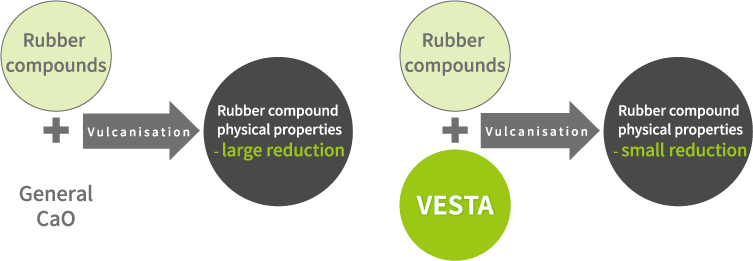 How VESTA prevents bubbles caused by moisture
Features of VESTA
VESTA is a calcium oxide dehydrating agent formulated to have the optimum level of activity for rubber. A range of surface treatments and masterbatch forms improve dispersibility in the compound and prevent scattering during roll operations.
- Activity level optimized for rubber
- Coarse particles removed for consistent quality
- Good dispersibility in the compound
- Low in impurities such as heavy metals and SiO2
- A grade lineup to match your process
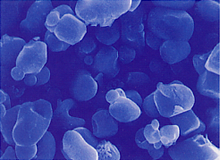 VESTA under the electron microscope
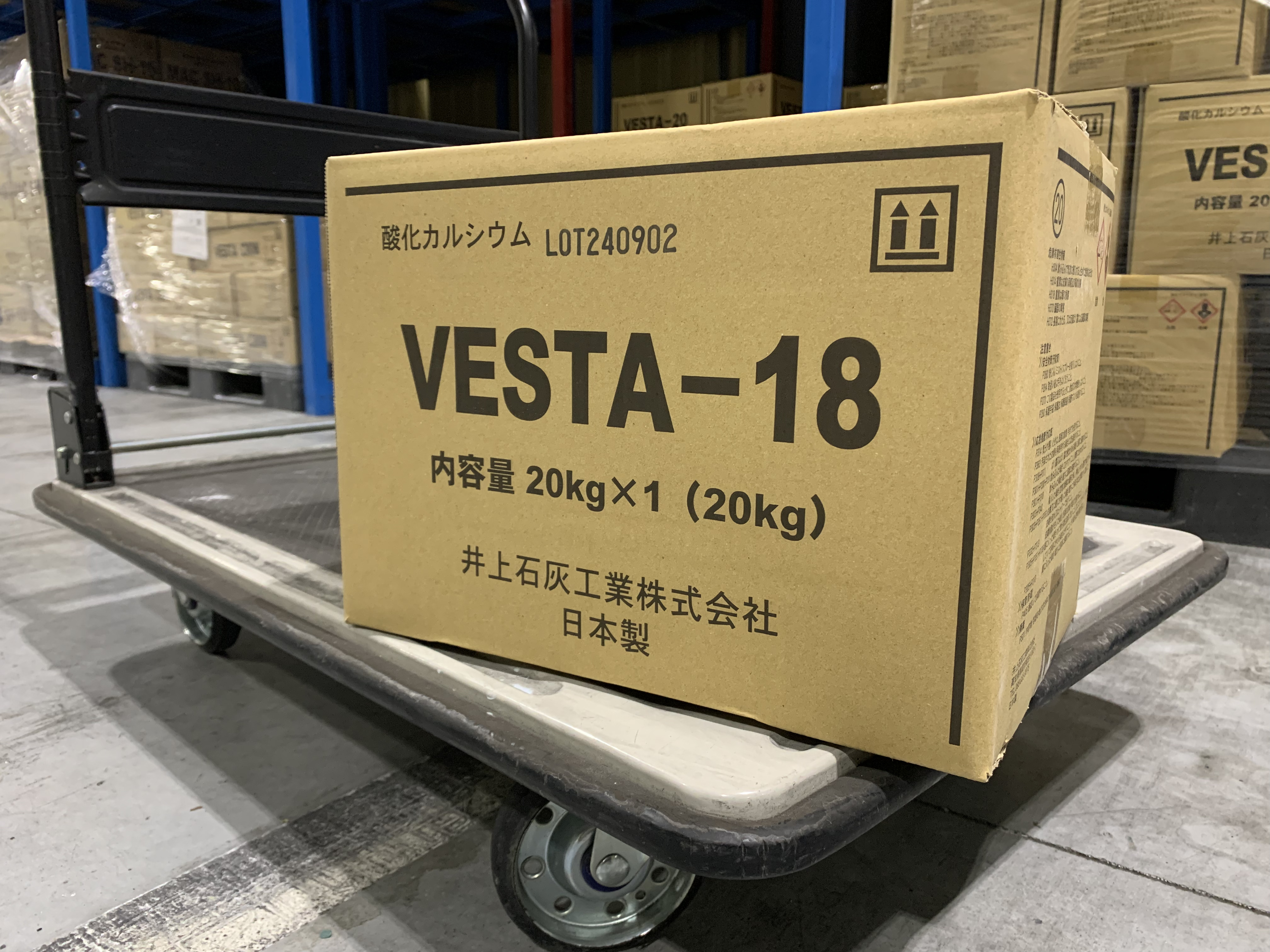 VESTA
VESTA
VESTA Grades
The lineup runs from untreated powder through surface-treated and granular forms to a sheet masterbatch, so a grade can be matched to your application and handling environment.
| Grade | Description |
|---|---|
| VESTA-PP | Powder type. Calcium oxide with no surface treatment. |
| VESTA-18 / VESTA-20 | Wet powder type. VESTA-PP surface treated with oil. |
| VESTA-BS | Granular type. VESTA-PP surface treated with fatty acid and formed into granules. |
| VESTA-C80N |
Sheet masterbatch. VESTA-PP bound in EPDM. Particularly effective for charging on an open mill, where it prevents scattering and improves dispersion. |
Scroll horizontally to view the full table

About VESTA